
Petermann technology lexicon

Quartz oscillators - precision for almost 100 years

Why do quartz oscillators keep the world in time?

Quartz oscillators are the invisible clocks of modern technology. Whether in smartphones, computers, cars or satellites - they ensure precise frequencies and stable time references everywhere. Without them, digital systems could not be synchronised.

History of quartz oscillators: from the laboratory to everyday life

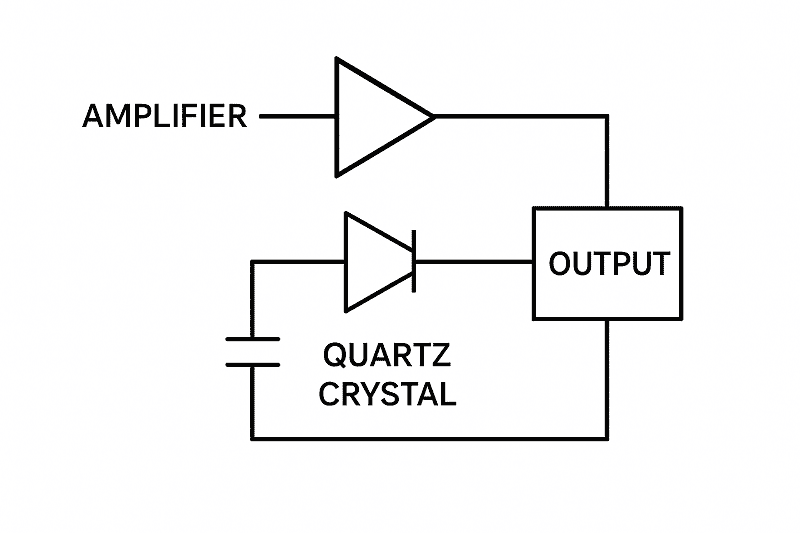
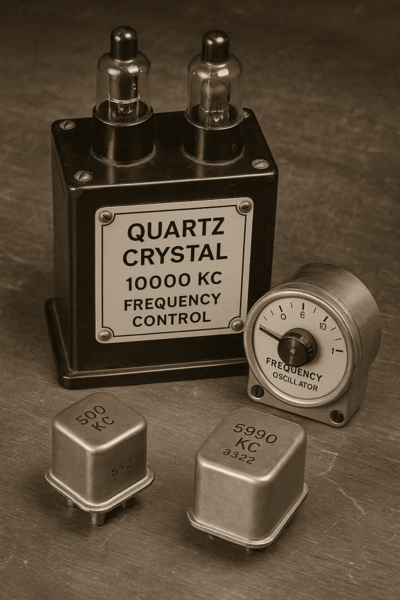
The history of the quartz oscillator begins in 1921, when Walter Guyton Cady developed the first quartz crystal oscillator. The first quartz movements came onto the market in the 1930s. Due to the reverse piezo effect, quartz crystals oscillate at an extremely stable frequency when they are electrically excited. This property revolutionised measurement technology, communication and later also the computer industry.
Types of quartz oscillators: an overview

Type

Abbreviation

Special features

Standard quartz oscillator

XO or SPXO

Cost-effective, basic model for simple applications

Temperature-compensated crystal oscillator

TCXO

High frequency stability with temperature fluctuations

Voltage-controlled crystal oscillator

VCXO

Frequency can be finely adjusted using external voltage

Oven-stabilised crystal oscillator

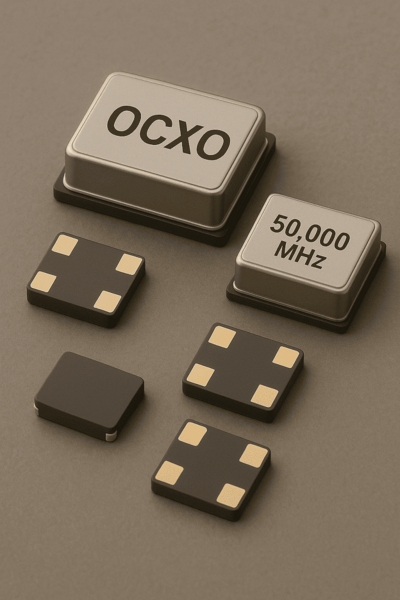
OCXO

Highest precision due to constant operating temperature

MEMS-based quartz oscillators

MEMS Oscillator

Alternative on microchip basis, robust and compact

Technical differences at a glance

  • Frequency accuracy:

    OCXO offers the highest accuracy (up to ±0.01 ppm), standard XO is usually ±25 ppm.

  • Temperature behaviour:

    TCXO are temperature compensated (±0.5ppm@-40/+85°C), standard XO are not.

  • Voltage control:

    VCXO can be readjusted in frequency - e.g. for synchronisation tasks.

  • LPXO:

    LPXOs are more accurate than like SPXOs and also have low power consumption. LPXOs have a frequency stability of typically ±5 to ±10ppm@-40/+85°C.

  • Power consumption & size:

    MEMS oscillators score highly in terms of small size and low power consumption, but are very expensive and are only available in plastic housings. There are many disadvantages to be considered when using MEMS oscillators in comparison to quartz oscillators.

Areas of application for quartz oscillators

  • Communication technology (mobile radio, GPS)
  • Industrial electronics
  • Automotive (ADAS, control units)
  • Medical devices
  • Time measurement in research

Conclusion: The pacemaker for our digital future

Whether smartphone, car or aerospace - quartz oscillators are and remain the pacemakers of electronics. Their further development ensures even more precise and efficient systems in the networked world.

Telephone contact

Our frequency experts are there for you

Call now

Write to us

Send us an e-mail - we will be happy to help you

Write an e-mail now