
Knowledge practice

Practical knowledge

Practical knowledge about frequency components and oscillator design

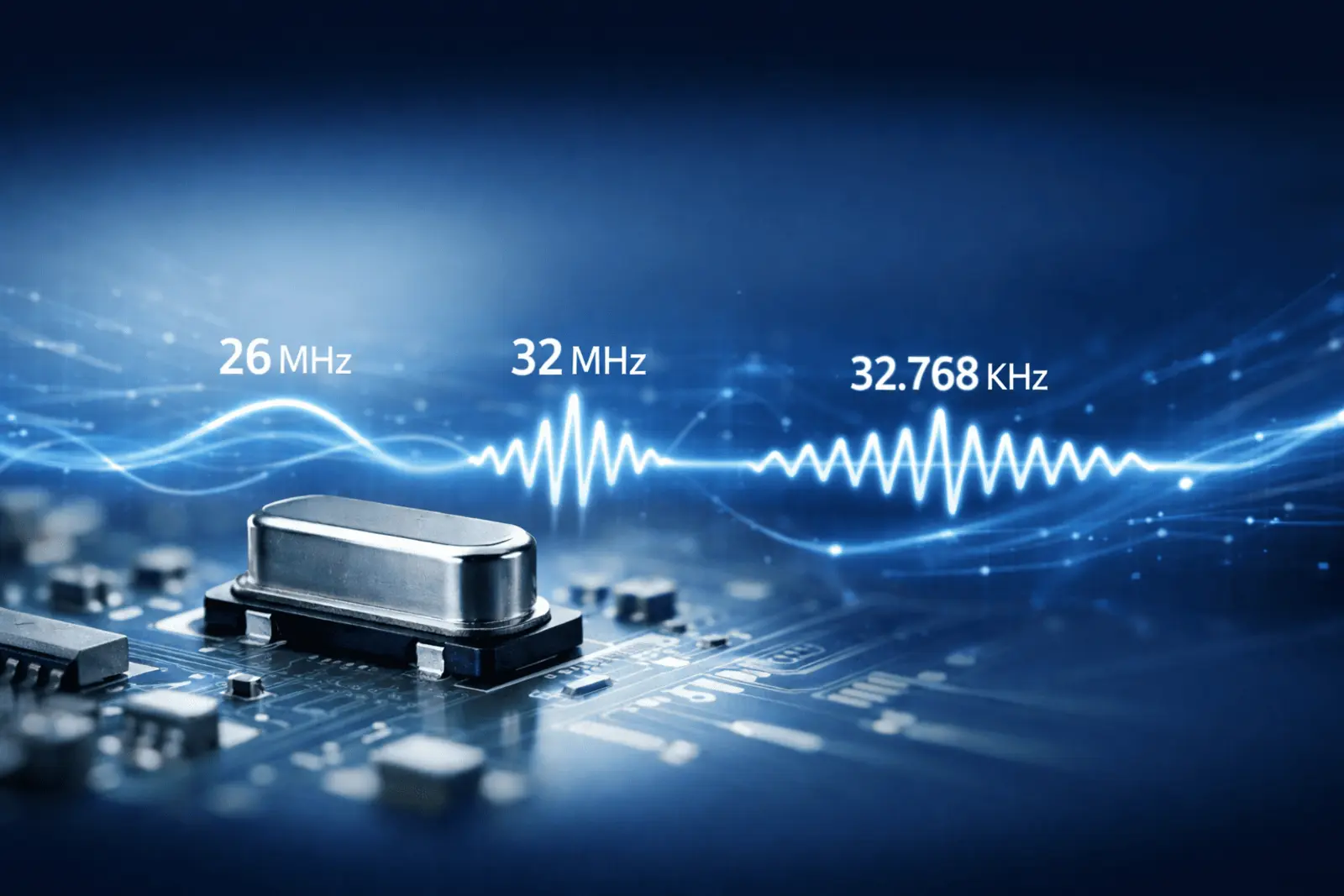
In our practical articles, we shed light on typical issues from development with crystals and oscillators - from oscillation problems with 32,768 kHz clock crystals to the optimum design of MHz radio crystals for modern radio applications. We analyse the technical background, highlight common sources of error and provide specific recommendations for robust, efficient hardware design.

The collection is constantly being expanded and offers developers practical support for demanding embedded and RF projects.


Contributions

FAQs

Why does a 32,768 kHz clock crystal often not oscillate in embedded applications?

A 32,768 kHz clock crystal often does not oscillate if the load capacitance, ESR, drive level and oscillator reserve are not properly matched. Especially with low-power RTC circuits, parasitic capacitances on the circuit board and IC pins have a particularly strong effect on the oscillation behavior. Unsuitable wiring or an unfavorable layout can also result in the negative input resistance of the oscillator stage being insufficient. In practice, therefore, not only the crystal data from the data sheet must be considered, but also C1, C2, Cstray and the real circuit must be verified. The practical articles on this page show typical sources of error and provide specific recommendations for a robust hardware design.

How are MHz oscillating crystals correctly dimensioned in the Pierce oscillator?

When dimensioning a MHz oscillating crystal in the Pierce oscillator, the correct matching of the crystal, load capacitance CL and the external capacitors C1 and C2 is crucial. The two circuit capacitors act together with parasitic capacitances and thus determine the actual operating point of the crystal. If the load capacitance is incorrectly designed, this can cause frequency deviations, poor starting behavior or increased EMC problems. ESR, start-up time and the negative input resistance of the oscillator stage must also be taken into account in order to achieve sufficient transient response reliability. The practical content explains these relationships in a technically sound manner and helps developers with the robust design of modern embedded and RF circuits.

How can the load capacitance CL of a quartz crystal in the circuit be measured and verified?

The load capacitance CL defines the operating point of a quartz crystal and directly influences its actual frequency in the application. For a reliable verification, it is not sufficient to simply take the nominal value from the data sheet, as parasitic capacitances are involved in the real circuit. External capacitors, IC input capacitances and PCB influences must therefore be considered together. Measuring and verifying the load capacitance helps to detect frequency errors at an early stage and to optimize the crystal circuit in a targeted manner. This page deals with precisely this issue in a practical way and shows what developers should pay attention to when matching the crystal and IC.

What role do ESR, drive level and start-up time play for quartz crystals and oscillators?

ESR, drive level and start-up time are key parameters for the safe functioning of a crystal oscillator. An ESR that is too high makes it difficult to start up, while a drive level that is too high can accelerate the ageing of the crystal and impair reliability. The start-up time describes how quickly the oscillator operates stably after being switched on or enabled, which is particularly relevant in energy-optimized embedded systems. These parameters must not be considered in isolation, but must be evaluated in conjunction with the oscillator stage, load capacity and layout. The practical articles on this page support developers in correctly classifying these values and testing them in real hardware.

How do parasitic capacitances and PCB layout influence the performance of crystal oscillators?

Parasitic capacitances between XIN, XOUT and ground are present in every real circuit and are made up of IC, layout and environmental components. They change the effective load capacitance of the quartz and can therefore influence the frequency, starting behavior and stability of the oscillator. An unfavorable PCB layout can make even a suitably selected crystal unusable because additional interference and EMC problems arise. This is why layout validation on the finished board is an important step in checking jitter, starting behavior and electromagnetic compatibility. This page specifically addresses these topics and provides practical tips for optimizing crystal and oscillator circuits.

Why PETERMANN-TECHNIK practical knowledge about quartz crystals and oscillators?

PETERMANN-TECHNIK combines in-depth frequency know-how with practical content for developers of embedded and RF systems. The articles deal with typical development issues, from oscillation problems with 32,768 kHz clock crystals to the optimum design of MHz radio crystals. Not only is the technical background explained, but common sources of error are also analyzed and specific recommendations for action are given. This creates a high utility value for developers who want to realize robust and efficient hardware designs. Thanks to the continuously expanding collection of practical articles, PETERMANN-TECHNIK is a strong point of contact for application-oriented knowledge about crystals, oscillators and frequency-generating components.

Telephone contact

Our frequency experts are there for you

Call now

Write to us

Send us an e-mail - we will be happy to help you

Write an e-mail now
Webshop